Education Loan & EMI: Complete Guide for Students
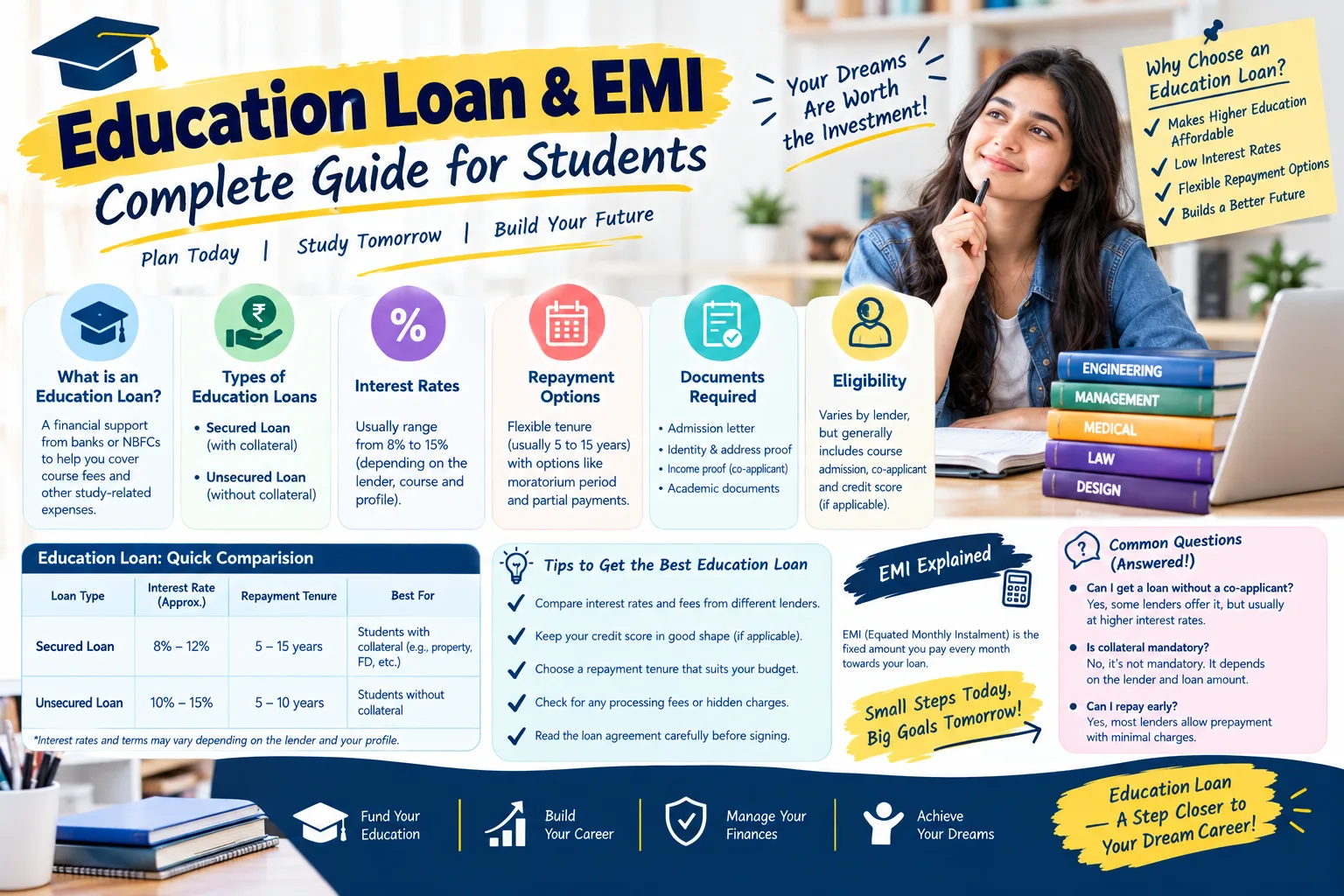
Planning for higher education is exciting, but the cost of studying can sometimes become a worry. Tuition fees are not the only expense. Students may also need money for books, laptops, accommodation, travel and other study-related needs. For families who cannot pay all these expenses at once, an education loan can be one way to manage the cost.
An education loan allows students to borrow money for eligible education expenses and repay it over a certain period. But before taking a loan, it is important to understand theeducation loan EMI , interest rate, repayment period and other charges.
A little planning at the beginning can save you from financial stress later.
What is an Education Loan?
An is education loana loan provided by a bank or financial institution to help students fund higher education. Depending on the lender and course, it may cover tuition fees and certain other approved expenses.
Loans may be available for courses in India and, in some cases, overseas education. However, the conditions are not same for every lender.
The bank may consider the student's course, college or university, academic background and the financial details of the borrower or co-borrower while processing the application.
How Does an Education Loan Work?
The basic process is fairly simple. A student applies for a loan, the lender reviews the application and, if approved, the amount is provided according to the agreed terms.
The loan then needs to be repaid, usually through monthly instalments. The repayment amount includes the borrowed amount and interest charged by the lender.
Some education loans can also have a moratorium period, which may allow repayment of the principal to begin after a specified period. But interest treatment during this period varies, so it should be checked carefully.
What is EMI in an Education Loan?
EMI means Equated Monthly Instalment. It is the amount paid regularly by the borrower towards the loan.
An education loan EMI generally includes two components:
Component Meaning
Principal The original amount borrowed
Interest The amount charged by the lender for providing the loan
EMI Regular payment covering principal and interest
The EMI amount depends on factors like the loan amount, interest rate and repayment tenure.
Factors That Affect Education Loan EMI
Suppose two students borrow different amounts but have the same interest rate and repayment period. The student who borrows more will generally have a higher EMI.
The repayment tenure also makes a difference. A longer tenure can reduce the monthly payment, but the borrower may end up paying more interest over the complete loan period.
Factor General Impact
Loan amount increases EMI generally increases
Interest rate increases EMI and total interest may increase
Tenure increases Monthly EMI may decrease
Tenure decreases Monthly EMI may increase
These are general examples. The actual amount depends on the lender's terms and loan agreement.
How to Choose the Right Education Loan?
Don't select a loan only because the EMI looks affordable. A low EMI can sometimes be the result of a longer repayment period.
Before applying, compare the education loan interest rate, processing fees, repayment tenure, moratorium conditions and any other applicable charges.
Also check whether the lender requires collateral or a co-borrower. Requirements can depend on the loan amount, course and other factors.
Most importantly, calculate how much you actually need. Borrowing extra money without a clear reason can make repayment harder after completing your studies.
Education Loan Repayment Tips
Once the repayment period begins, paying your EMI on time is important. Missing payments may result in additional charges and can affect your credit history, depending on the circumstances and lender policies.
If possible, keep a small emergency fund so that one difficult month doesn't immediately create a repayment problem.
Students should also understand whether making part-prepayments is allowed and whether any charges apply. The rules are different across lenders.
Frequently Asked Questions
- What is an education loan EMI?
An education loan EMI is the regular amount paid towards an education loan. It generally includes both principal and interest.
- How is education loan EMI calculated?
The EMI is mainly based on the loan amount, applicable interest rate and repayment tenure. Lenders may provide an EMI calculator to estimate the monthly payment.
- What is the interest rate on an education loan?
The education loan interest rate depends on the lender, loan type, course and other applicable conditions. Students should compare current offers before applying.
- What is a moratorium period in an education loan?
A moratorium period is a specified period during which regular loan repayment may be postponed according to the loan terms. Interest may still accrue, so borrowers should check the agreement carefully.
- Can students get an education loan without earning?
Education loan eligibility depends on the lender. In many cases, a parent or guardian may be included as a co-borrower, subject to the lender's requirements.
Final Thoughts
An education loan can make it easier to manage the cost of higher education, but it should not be treated as free money. It is a financial responsibility that needs proper planning.
Before choosing a loan, look beyond the monthly EMI. Compare the education loan interest rate, total repayment amount, tenure, charges and other conditions. Also make sure the expected repayment will be manageable after completing your course.
Taking a few extra minutes to understand the loan now can help you avoid unwanted surprises later. A well-planned education loan can support your studies while keeping your finances more organised.